
July 2026
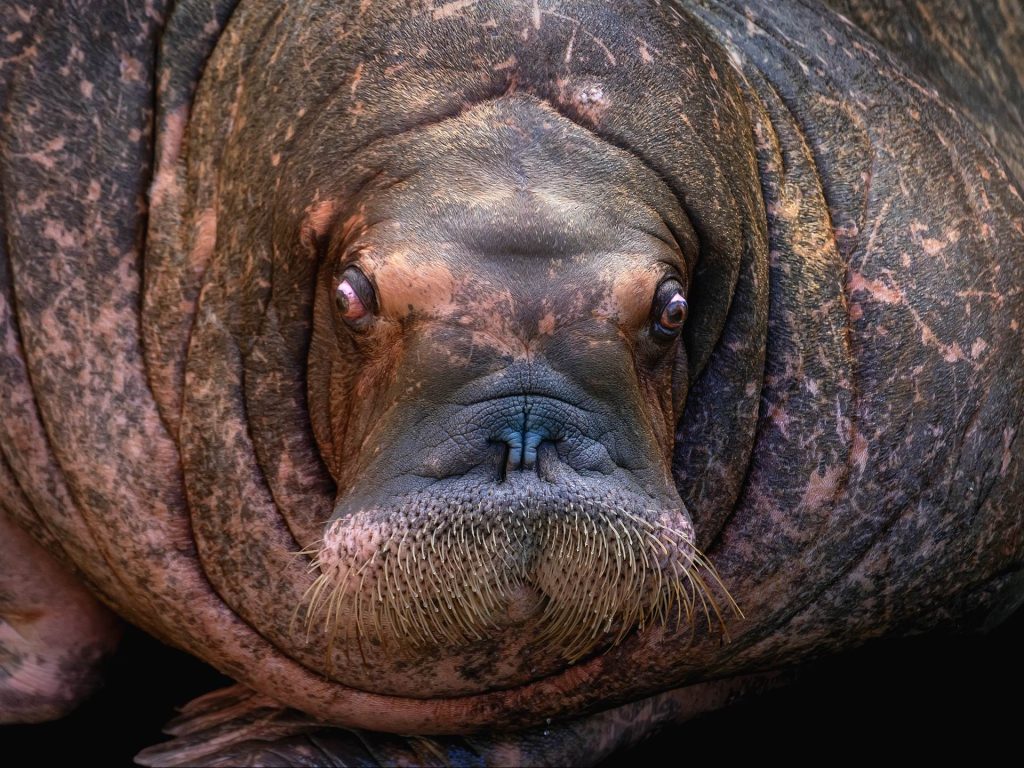
There are moments during a photographic session when the distance between an animal and me seems to disappear. It is not a romantic idea. It is a physical experience, almost immediate. A sustained gaze. A subtle gesture. A shared breath in silence. In those moments I feel a profound sense of empathy, a kind of recognition that needs no words. I understand, without having to justify it, why so many people passionately defend animal rights. I share that visceral rejection of unnecessary suffering, of gratuitous violence inflicted upon animals.
And yet that certainty begins to waver in everyday life.
I return home from a trip and scrape dozens, sometimes hundreds, of crushed insects from my windshield. I spray insecticide on a plant to save it from a pest. I kill mosquitoes buzzing through the night. I do these things without moral hesitation, without guilt, without the inner paralysis that appears when the animal looking back at me has eyes that meet my own. A pig, a frog, or any other animal does not stop to ask whether it should kill another living being. They act according to the logic of their own world. As far as we know, humans are the only species capable of asking whether any of this is right or wrong, and that moral awareness inevitably makes us responsible.
An uncomfortable and unavoidable question follows: what exactly do we mean by an animal when we speak of “animal rights”? Where do we draw the line? By what standard do we decide who deserves moral consideration and who can be killed without troubling our conscience? The word animal often functions as a deceptively simple category. Under that single label coexist radically different forms of life: an elephant and an aphid, a dog and a cockroach, a wolf and a vole regarded as an agricultural pest. Yet our moral concern does not extend to all of them equally. It shifts according to criteria we rarely acknowledge: familiarity, appearance, beauty, tenderness, or simply the capacity to evoke something in us that feels recognizably close.
We identify with what resembles us. We protect what we can look at without revulsion. But we push aside, or simply eliminate, whatever falls outside that emotional frame: insects, urban rodents, animals that infest, damage or inconvenience us, or simply those we find ugly. Faced with these creatures, our moral principles become selective, even utilitarian. We exterminate them for reasons of public health, economics or convenience, or simply because they disgust us. If morality enters the picture at all, it is usually only to decide that the method should be as humane as possible.
Philosophers have long tried to answer this question. Peter Singer, for example, argues that if suffering is what truly matters, then the interests of all sentient beings deserve equal consideration, regardless of species. Others argue that certain animals possess an inherent value of their own, and therefore have rights that should not be sacrificed merely for human convenience. Yet even these attempts require drawing a boundary, deciding who belongs within that moral community and who remains outside it. And that boundary rarely matches the one we instinctively draw in our everyday relationship with animals.
But another difficulty soon appears. We tend to measure suffering through the lens of our own human experience. We readily recognize it in a dog, are less certain about it in a rat, and barely perceive it in an insect. Yet, as the biologist Jakob von Uexküll argued with his concept of Umwelt, every animal inhabits its own world, a subjective reality shaped by its senses, its needs and its way of living. Our inability to imagine what it is like to be an insect or a small rodent does not make their experience any less real. It merely reminds us that their world lies beyond our reach. The limits of our empathy are limits of our imagination, not of ethics.
And yet all these creatures belong to the same living fabric, one in which life is sustained by life. There is another uncomfortable truth that we rarely wish to confront: there is no way of inhabiting this world without causing harm. Every living being depends on other living beings in order to exist. Predation, death and destruction are not exceptions. They are part of the very condition of life itself.
The reintroduction of wolves to Yellowstone makes this clear. For decades, the absence of this apex predator allowed elk and deer populations to expand until they stripped riverbanks of vegetation. The return of the wolf meant death for many individuals and fear for many others. Yet it also allowed willows and aspens to recover, beavers to return, birds and insects to flourish, and even the courses of rivers to change. From the perspective of the prey, the story is tragic. From the perspective of the ecosystem, it is one of recovery. There is a form of violence that is not a moral failure, but an essential component of ecological balance. The well-being of an ecosystem and the well-being of each individual do not always coincide.
Nature follows its own logic, one that may strike us as cruel. What truly disrupts that balance, however, is the disproportionate scale of human intervention. Through our expansion we have eliminated predators, simplified ecosystems, turned animals into pests and altered food webs until many dynamic equilibria have collapsed. We try to patch over our behaviour with moral principles, and I am not suggesting that these efforts are unnecessary. I do not believe we should behave as though morality did not matter, nor abandon the attempt to avoid unnecessary suffering. But perhaps, even before our selective compassion, what matters most is preserving the balance of the living system and acknowledging that we ourselves are part of the problem.
Perhaps that is why building a fully coherent ethics proves so difficult. Push any moral theory to its ultimate consequences and it either becomes impossible to live by or begins to reveal its own contradictions. Defending “animals” in the abstract is easy. Confronting what that category actually includes, from insects to mammals we classify as pests, from charismatic prey to the predators that kill them, is something else entirely.
The challenge, then, is to accept that our relationship with animals is filled with tensions that can never be completely resolved: between the individual and the whole, between compassion and survival, between our need to impose moral order and a natural world that always escapes us to some degree. Our morality is neither universal nor pure. It is fragmented, situated and profoundly shaped by what we feel, and by what we prefer not to see.
We speak of “animals” as though we knew exactly what we meant. In reality, we defend only a few: those that fit comfortably within our emotional landscape. The rest, insects, rodents, pests, inconvenient predators, remain out of focus. Yet it is precisely through them that we discover how selective, aesthetic and utilitarian our ethics often are.
We cannot live without causing harm. We cannot clean a windshield, spray a plant or reintroduce wolves into an ecosystem without, in some way, taking part in that endless web of life and death. Even washing our hands means killing millions of living organisms. There is no neutral or innocent position. The real question is what kind of violence we are willing to accept, and how consciously we choose to accept it.
Perhaps we have little choice but to admit that we barely understand what it means to be any of the living beings that inhabit this planet. Each lives within its own world, shaped by ways of sensing and existing that are often radically different from our own. To accept that we live within a fabric of lives sustained by other lives, while still striving to preserve the balance that holds it together and to avoid suffering whenever we can, is already an act of humility. In the end, the most revealing question may not be what animals are, but what our way of protecting them, using them or ignoring them reveals about ourselves, knowing that we will never fully understand the worlds they inhabit.